
 O'zbekcha
 Ўзбекча
 Русский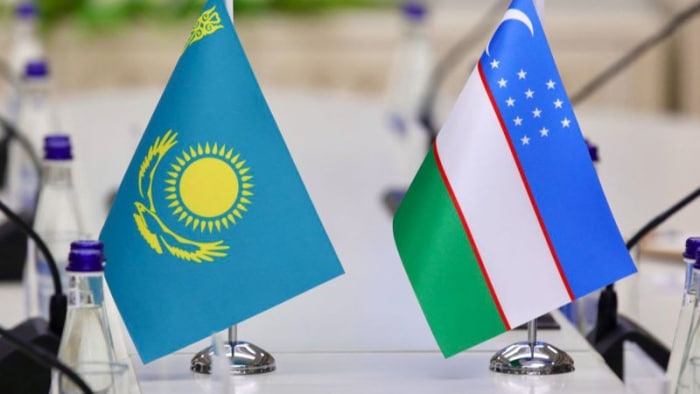
International cooperation
Today, the cooperation between the teachers of the Department of Economics of the Higher School of Economics and Business of the Kazakh National University named after Al-Farabi (https://farabi.university/department/64) and the teachers of the Samarkand branch of the Tashkent State University of Economics is carried out in the educational and scientific direction. The teachers jointly publish articles in journals and monographs in Scopus, take part in international projects. The teachers of the Samarkand branch of the Tashkent State University of Economics annually take part in the organization and holding of the International Winter/Summer School "Sustainable Development and ESG: Global Challenges, National Priorities, Effective Solutions" as lecturers, the students were listeners of the school.
This year, the lecturers at the International Winter School of the Farabi Kazakh National University were professors from the USA- Michael Brody, Thailand - Ravipim Chaveesuk, China - Wei Feng, Indonesia - Yosini Deliana, Serbia - Lela Ristic, Sri Lanka - Raveenthiran Vivekanantharaza, Ukraine - Legeza Darya and Dziuba Nataliia, Uzbekistan - Ahrorov Farhod and Ganiev Ibragim, Kyrgyzstan - Saparbaeva Ainura and staff of the Department of “Economics” of the Higher School of Economics and Business of KazNU. The International Winter School united in its work participants from China, Uzbekistan, Ukraine, Kyrgyzstan and scientists from universities of the Republic of Kazakhstan.
The International Winter School program covers almost all SDG goals: sustainable lifestyles and the economic growth dilemma, data analysis using economic and mathematical methods, building research models; quality assurance issues in higher education towards sustainable development; innovation and best practices in sustainable food marketing around the world, the role of green packaging in addressing ESG issues, the development and application of digital economy of China, ecological economy and national policy, doing business and ESG trends in Kazakhstan; sustainable development in modern conditions: global challenges and national priorities; human resources sustainability and its impact on business development; climate change and sustainable agriculture, improvement of state support measures aimed at agricultural development, development of renewable energy in Kazakhstan based on global trends; Thai sustainable agro-food chain; and sustainable development: the future and challenges of tourism in Central Asian countries.
Joint events allow scientists and students to gather for productive dialog, exchange of ideas and joint search for solutions to current world problems.
International cooperation allows universities not only to increase their ratings, but also to make a significant contribution to the development of the global scientific and educational space. Such interaction contributes to the formation of global networks that help to attract funding, improve educational programs and research, and strengthen the international reputation of educational institutions.